
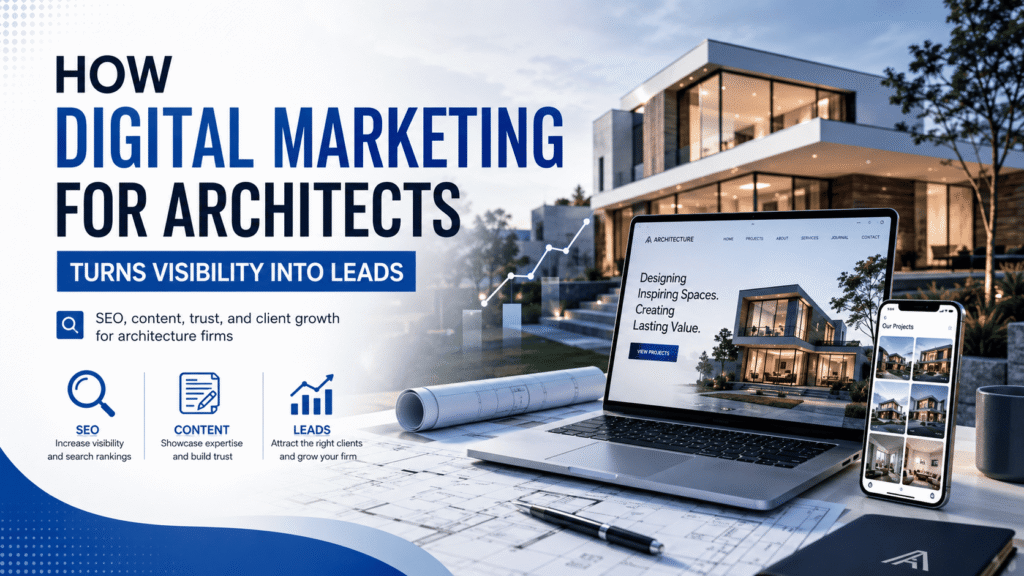
Digital Marketing for Architects is the process of using SEO, website content, project portfolios, local search, social media, email marketing, and lead generation systems to help architecture firms attract qualified clients online. For an architecture firm, digital marketing is not only about sharing beautiful project images. It is about showing expertise, explaining the design process, ranking for the services clients search for, and turning website visitors into consultation inquiries. A strong digital marketing strategy helps architects build trust, showcase real project experience, and win more residential, commercial, renovation, luxury, or interior design projects without relying solely on referrals.
Most clients now research an architecture firm before making contact. They check the website, portfolio, reviews, project experience, team details, and the clarity with which the firm explains its services. A successful architecture marketing strategy should connect all online channels to one goal: helping the right client feel confident enough to contact the firm. SEO brings targeted visitors from Google, case studies build trust, social media supports visual trust, and clear calls to action convert visitors into leads.
Why Architecture Firms Need Digital Marketing
Many architecture firms still rely on referrals and word of mouth. These sources are valuable, but they are not always predictable. Digital marketing gives architecture firms a stronger way to reach people who are already searching for architectural services.
The real issue for many firms is not a lack of design skill. It is unclear communication. A firm may have excellent project experience, but if the website does not explain whom it helps, what services it offers, where it works, and why its process differs, potential clients may not understand its value.
Digital Marketing for Architects solves this by turning expertise into visible online assets, such as service pages, blog posts, project case studies, FAQs, location pages, and portfolio content.
Core Benefits of Digital Marketing for Architects
The first major benefit is visibility. When potential clients search for something like commercial architect, residential architect, renovation architect, interior architect, or architecture firm near me, an optimized website can appear in Google search results.
The second benefit is trust. A strong online presence shows that the firm is active, professional, and experienced. Detailed project pages, testimonials, team profiles, awards, process explanations, and educational content all support credibility.
The third benefit is better lead quality. When an architecture firm clearly explains its services, project types, process, and expectations, it naturally attracts more serious inquiries and filters out people who are not the right fit.
EEAT for Architecture Firm Marketing
For architecture firms, EEAT means showing real experience, expertise, authority, and trust across the website. This matters because clients want proof before they contact a firm.
A strong architecture website should include real project case studies, professional team profiles, client testimonials, project locations, process details, high-quality photography, awards, qualifications, and clear contact information. These elements help both users and Google understand that the firm is credible and experienced.
| EEAT Element | Why It Helps |
| Real project case studies | Shows practical experience |
| Team profiles | Builds human trust |
| Client testimonials | Adds third-party proof |
| Project locations | Supports local relevance |
| Process explanation | Helps clients understand how the firm works |
| Awards or memberships | Adds authority |
| Clear contact details | Builds transparency |
Strong EEAT should never be fake. An architecture firm should only add real credentials, real team details, real project photos, real reviews, and accurate business information.
Best Digital Marketing Channels for Architects
A strong digital marketing strategy for architects typically integrates several channels. SEO helps the firm rank in Google. Local SEO helps it appear for city-based searches. Social media helps showcase visual work. Content marketing answers client questions. Email marketing keeps prospects engaged. Case studies prove the firm’s real experience.
The website should remain the center of the strategy. Social media can attract attention, but the website is where serious prospects review services, project details, testimonials, and consultation options.
SEO for Architects
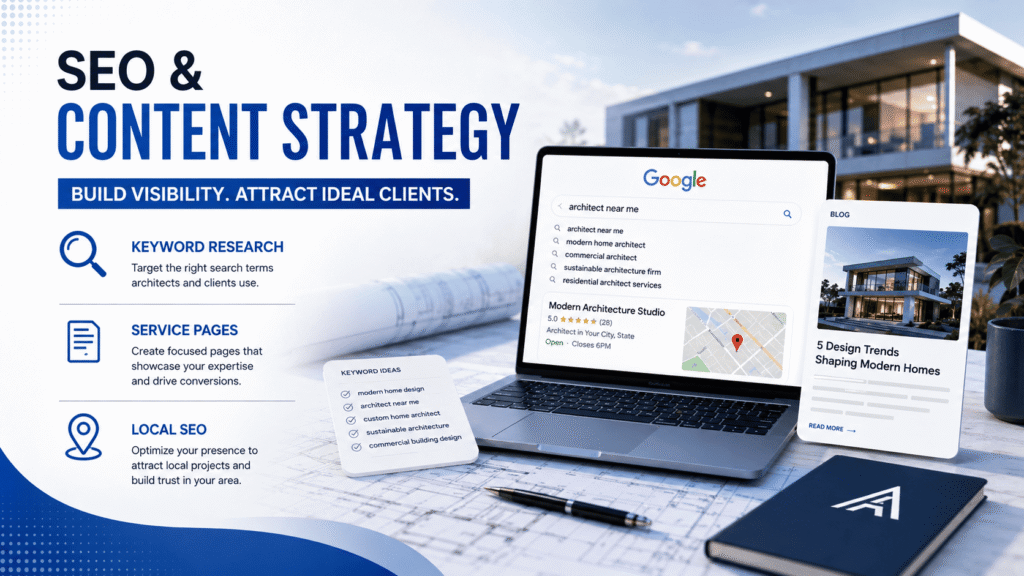
SEO for architects is one of the most important long-term strategies because many clients begin their journey on Google. A firm should optimize its website for service, location, and project-type keywords, as well as informational search terms.
For example, a residential firm can target keywords like custom home architect, home renovation architect, house extension architect, luxury residential architect, or sustainable home design. A commercial firm may target office design, retail architecture, hospitality architecture, or commercial building design.
Each main service should have its own optimized page. A firm should not hide all its services on a single short page. Separate pages for residential architecture, commercial architecture, renovation design, interior architecture, planning support, and 3D visualization help create stronger topical relevance.
Local SEO for Architecture Firms
Local SEO helps architecture firms attract clients in specific cities or service areas. This is important because many clients prefer working with architects who understand local planning rules, building styles, materials, and approval processes.
A strong local SEO strategy includes an optimized Google Business Profile, consistent business details, local service pages, client reviews, project locations, and city-relevant content. A good local page should not simply repeat “architect in city.” It should explain the firm’s local experience, common project types, planning challenges, and completed work in that area.
Website Strategy for Architecture Firms
An architecture website should look professional, but design alone is not enough. The website must clearly answer four questions:
What does the firm do?
Who does it help?
Where does it work?
How can a client start?
The homepage should include a clear positioning statement, main services, project examples, trust signals, testimonials, and a strong call to action. Service pages should explain the client problem, the firm’s process, deliverables, project suitability, and next steps.
Portfolio pages should also be more than image galleries. A strong project page should include the project type, location, client goal, design challenge, solution, and final result.
Case Studies and Portfolio Marketing
Case studies are one of the strongest conversion tools for architecture firms. A visitor may like the design style, but a case study helps them understand how the firm solves real problems.
A good case study should include project background, client goals, design challenges, planning considerations, materials, process, final outcome, and professional images. Before-and-after visuals, sketches, 3D renders, and client feedback can make the case study even stronger.
This gives potential clients confidence and also gives Google more unique content to understand the firm’s expertise.
Lead Generation for Architects
Lead generation for architects should focus on quality, not just quantity. A firm does not need hundreds of random inquiries. It needs the right inquiries from people with suitable projects, realistic budgets, and trust in the firm’s process.
Useful lead-generation assets include a renovation planning checklist, custom home design guide, project budgeting worksheet, consultation preparation guide, or downloadable design process guide.
These resources can be promoted through landing pages. After a visitor downloads a guide, the firm can follow up with helpful emails, project examples, and invitations to consultations. This creates a warmer and more professional sales journey.
Conversion Elements That Improve Enquiries
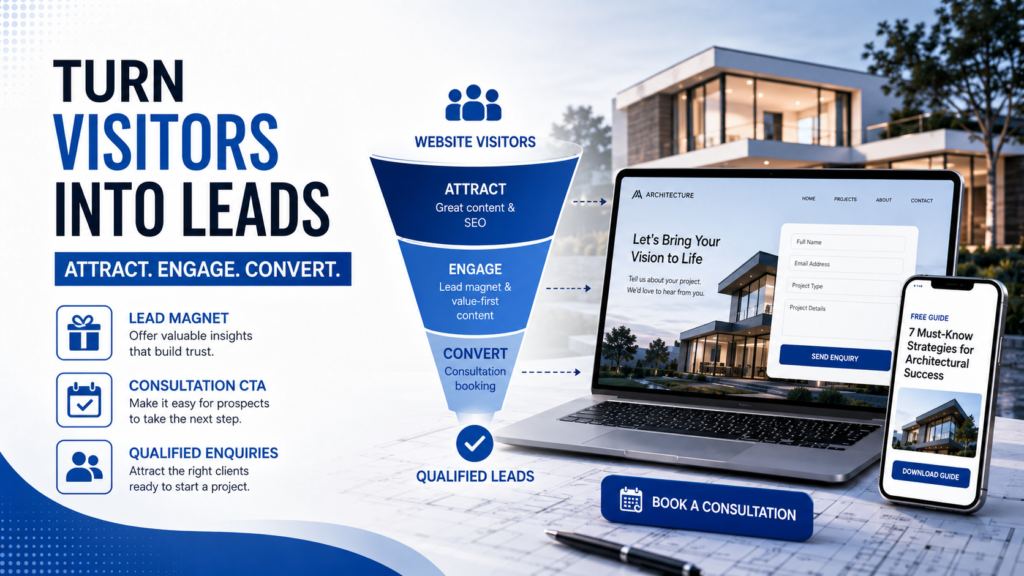
Digital marketing should not only bring traffic. It should guide visitors toward action. A conversion-focused architecture website makes it easy for potential clients to contact the firm.
Strong conversion elements include:
- Clear consultation button
- Service-specific contact forms
- Project inquiry form
- Testimonials near CTAs
- Portfolio links on service pages
- Downloadable planning guide
- Phone number and email visibility
- “View Similar Projects” buttons
- Simple next-step explanation
Instead of using only “Contact Us,” an architecture firm can use more specific CTAs such as:
Book a Project Consultation
Discuss Your Architecture Project
Request a Renovation Consultation
View Similar Projects
Download the Planning Checklist
These CTAs match user intent better and feel more helpful.
Common Digital Marketing Mistakes Architects Should Avoid
One common mistake is creating a beautiful website with weak written content. Another mistake is posting on social media without a clear strategy. Some firms also target broad keywords but ignore specific services, locations, and project types.
Another major mistake is hiding expertise. Many firms have strong experience, but their websites do not explain the process, challenges, or results behind the work. This makes the firm look less experienced than it really is.
Build a Digital Presence That Wins Better Architecture Projects
Digital Marketing for Architects works best when it is clear, helpful, and built around client intent. An architecture firm should not only show what it has designed. It should explain how it thinks, how it solves problems, how it manages projects, and why clients can trust its expertise.
A complete strategy includes SEO, local visibility, strong service pages, helpful content, detailed case studies, social media support, lead magnets, email nurturing, and clear conversion points. When these elements work together, the firm becomes easier to find, trust, and contact.
For architecture firms that want better clients and stronger projects, digital marketing is not just promotion. It is a long-term system for building authority, attracting qualified leads, and turning design expertise into business growth.
Suggested CTA:
Book a Consultation to Discuss Your Architecture Project
Frequently Asked Questions
What is digital marketing for architects?
Digital marketing for architects involves using SEO, website content, social media, local search, email marketing, project portfolios, and lead generation strategies to help architecture firms attract clients online.
Why do architects need digital marketing?
Architects need digital marketing because most clients research firms online before making contact. A strong digital presence helps a firm build trust, demonstrate expertise, rank higher on Google, and attract higher-quality project inquiries.
Is SEO important for architects?
Yes. SEO helps architecture firms appear when potential clients search for architectural services, project advice, and local architecture firms.
What should an architecture website include?
An architecture website should include service pages, portfolio projects, case studies, team details, testimonials, FAQs, location information, and clear consultation buttons.
How can architecture firms get more leads online?
Architecture firms can get more leads by improving website structure, ranking service pages, publishing helpful content, creating case studies, optimizing local SEO, collecting reviews, and using strong calls to action.
Editorial Note
This guide is created to help architecture firms understand how SEO, content marketing, local visibility, case studies, and lead generation work together to attract qualified clients online.