

A busy spring does not always mean a profitable landscaping year. One-off cleanups may fill a few weeks, but recurring lawn care contracts create steadier work, stronger customer relationships, and more predictable revenue from spring through winter.
The landscaping companies that book the whole season build a system that turns a first visit into an ongoing service relationship. Their websites present seasonal maintenance as the normal option, their estimates offer clear packages, and their marketing begins before homeowners start searching heavily.
A spring cleanup can become weekly lawn maintenance. Weekly maintenance can lead to fall cleanup, snow removal, and renewal for the following year. The opportunity is often already on a property the company has just serviced.
The Season Is Won Before the Grass Starts Growing
Many landscaping businesses begin promoting spring services when the weather improves. By then, homeowners may already be comparing contractors, requesting estimates, and reserving preferred dates.
Companies that stay ahead prepare during the quieter months. They update service pages, organize project photos, contact previous customers, and publish location-focused content before demand rises.
A page targeting “spring cleanup in [city]” should be live well before spring. Search engines need time to discover and evaluate it, while customers need time to compare providers. The same applies to lawn mowing, garden maintenance, commercial landscaping, and snow removal pages.
Early preparation also helps the company estimate crew capacity and group customers into efficient routes.
A One-Off Cleanup Should Open the Door
Spring cleanups are valuable because they introduce a customer to the company when the property clearly needs attention. The homeowner has shown a willingness to pay for professional help, and the company has a chance to prove its reliability.
The mistake is treating that first service as the entire relationship.
A stronger estimate gives the customer clear options:
- One-time spring cleanup
- Cleanup plus weekly or biweekly lawn care
- Full-season property maintenance
- Year-round care with fall cleanup and snow removal
This does not pressure the customer. It shows that ongoing care is available.
Many customers accept one-off work because no one explains what recurring landscaping services include. When a maintenance plan is presented clearly, the customer can compare convenience, appearance, and long-term value instead of deciding around one visit.
Sell a Result, Not a List of Chores
Landscaping packages often fail because they are described only as tasks. Customers see mowing, trimming, edging, and cleanup, but they do not immediately understand the outcome.
A stronger package sells a lawn that stays neat, a property that remains presentable, and one reliable company for the whole season.
Customers should still know the visit frequency, service period, included work, weather policy, payment schedule, and any services charged separately.
Clear package names also help. “Full-Season Lawn Care” communicates more than “Package B.” “Commercial Grounds Management” sounds more useful than “Premium Plan.”
The easier the offer is to understand, the easier it is to choose.
The Most Profitable Lawn May Be Next Door
Recurring lawn care is not only about price. Route efficiency often determines whether a contract is profitable.
Two similar properties may create different margins if one sits beside existing customers and the other requires a long drive. Travel time, fuel, equipment setup, and property access all affect the real cost of service.
Strong landscaping companies often build density in selected neighbourhoods instead of chasing every lead across an entire city. Local service-area pages and nearby project examples can support that strategy by attracting customers around existing routes.
More leads are not always better. The right leads, in the right areas, can produce a fuller and more profitable schedule.
Homeowners and Property Managers Do Not Buy the Same Way

A homeowner and a property manager may both need lawn maintenance, but they evaluate a landscaping company differently.
Homeowners usually care about appearance, convenience, communication, and trust. They respond well to clear pricing, before-and-after photos, reviews, and simple booking.
Commercial clients focus more on reliability, insurance, safety, service records, crew capacity, and contract terms. A property manager wants to know whether the company can meet a schedule and resolve issues without creating extra work.
These audiences should not be sent to one general service page. Separate residential and commercial landscaping pages allow the company to answer the right questions and present the right proof.
Before-and-After Photos Should Help Make the Sale
Landscaping is highly visual, yet many websites hide their best work inside a gallery that visitors may never open. A high-converting website for landscapers places project photos beside service information and estimate forms instead of hiding them inside a separate gallery.
Project proof should appear on the service page where the customer is deciding whether to request an estimate.
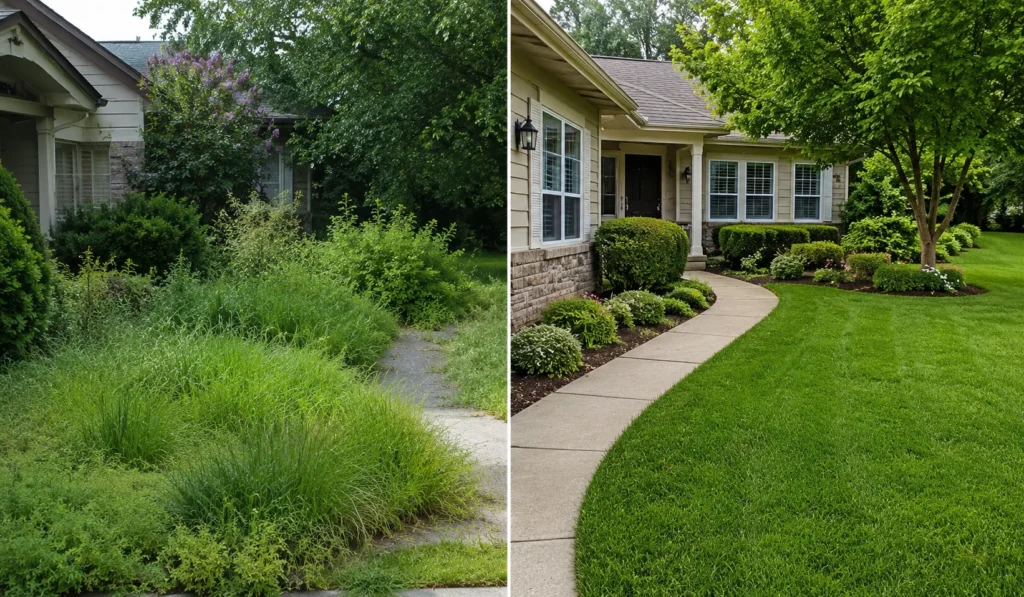
A lawn maintenance page can show an overgrown yard before service and the same property after mowing, edging, and cleanup. A commercial page can show a neglected entrance transformed through scheduled grounds maintenance.
Captions should mention the property type, service area, work completed, and service frequency. Original photos strengthen trust because they show real work, especially when paired with a short project summary.
A Quote Is the Start of the Conversation
Many landscaping leads disappear after an estimate is sent. The prospect becomes busy, compares several companies, or forgets to respond.
A simple follow-up sequence can recover some of those opportunities without sounding aggressive.
The first message can confirm that the estimate was received. A second can clarify package differences or available dates. A final message can explain that the seasonal route is being finalized and ask whether the customer wants a place reserved.
The same principle applies after one-off work. Once a spring cleanup is complete, the company can recommend a maintenance plan based on the property’s condition.
Specific follow-up feels more helpful than a generic promotion.
November Should Change the Service, Not Stop the Business
A landscaping company does not need to disappear when mowing slows down. It can move customers into the next seasonal service.
Depending on the market, off-season work may include fall cleanup, leaf removal, pruning, storm cleanup, holiday lighting, snow removal, and ice management.
Each important service should have its own page. A general lawn care page will not fully answer someone searching for a snow removal contract. Dedicated pages can explain equipment, response times, service areas, pricing, and commercial capacity.
Existing customers are often the best starting point. A homeowner who already trusts the company for lawn care may prefer the same provider for fall cleanup or winter service.
Reviews Close the Gap Between Interest and Trust
When several local landscapers appear capable, recent reviews often help a customer make the final choice.
The best time to request a review is shortly after the result is visible. A freshly cleaned yard or neatly maintained lawn gives the customer something specific to describe.
The request should be brief and include a direct review link. Reviews can then be displayed near service descriptions, project examples, and estimate forms.
Comments about punctuality, communication, consistency, and workmanship answer the concerns new customers may have before booking.
A Full Calendar Is Built Through Retention
Marketing may win the first job, but dependable service wins the next season.
Recurring landscaping clients stay when visits are consistent, weather delays are communicated, invoices are clear, and concerns are handled quickly. Quality checks, seasonal reminders, and renewal messages make the service easier to trust. Before a contract ends, the company can provide a summary of completed work and a renewal option. The customer should not have to restart the buying process every year.
The companies that book the whole season connect seasonal SEO, clear packages, efficient routes, project proof, follow-up, reviews, and reliable delivery. One-off jobs will always remain part of landscaping. Stronger companies simply treat them as entry points rather than dead ends.
A spring cleanup can become summer lawn maintenance. Summer maintenance can lead to fall cleanup. Fall cleanup can lead to winter service. A reliable year can lead to renewal and referrals. That is how landscapers book the whole season instead of rebuilding the calendar from zero every spring.
Landscaping companies that want to turn more visitors into seasonal clients need a website structured around services, locations, project proof, and easy estimate requests. They can request a free website demo to see how that structure could work for their business.
Frequently Asked Questions
How do landscapers get recurring clients?
Landscapers gain recurring clients by offering seasonal maintenance packages alongside one-time services, following up after estimates, contacting past customers before spring, and recommending ongoing care after the first job.
When should landscapers start marketing spring services?
Preparation should begin during winter. Service pages, local SEO content, customer renewal campaigns, project galleries, and booking systems should be ready before spring demand increases.
What should a seasonal lawn care package include?
A seasonal package may include scheduled mowing, trimming, edging, garden-bed maintenance, fertilization, cleanup, and optional fall services. It should also explain visit frequency, contract dates, payment terms, exclusions, and weather policies.
Should residential and commercial landscaping services have separate pages?
Yes. Homeowners usually prioritize convenience, appearance, and easy booking, while commercial clients focus on reliability, insurance, capacity, documentation, and contract management.