

For manufacturers, suppliers, and brands in the building materials industry, digital marketing for architectural products is no longer just about visibility. It is about helping the right people find, evaluate, and trust a product before it reaches the specification stage. Architects, interior designers, specifiers, contractors, consultants, and developers don’t search like general consumers. They look for performance data, application details, compliance, technical files, visual proof, and evidence that a product works in real projects.
That is why architectural product marketing needs a distinct approach. A strong strategy does more than generate traffic; it helps brands appear in relevant searches, supports product selection, and attracts better leads by providing useful content, optimized product pages, downloadable resources, and trust-building proof. Done well, digital marketing for architectural products becomes a practical system for driving qualified inquiries, improving brand authority, and getting products shortlisted for real projects.
Why Architectural Product Marketing Is Different From General Marketing
Marketing architectural products is not the same as marketing everyday consumer goods. Buyers in this space usually include architects, interior designers, consultants, specifiers, contractors, procurement teams, and project stakeholders. Their decisions are rarely based on appearance alone. They often compare technical performance, sustainability claims, certifications, maintenance requirements, installation methods, acoustic control, fire ratings, durability, and suitability for a specific building type.
For example, a company selling acoustic wall panels may need content for offices, schools, hospitality interiors, and commercial renovation projects. A brand offering aluminum cladding systems may need landing pages focused on facade performance, finish options, weather resistance, and long-term durability. A manufacturer of architectural glass partitions may need to address privacy, acoustic control, customization, compliance, and clean design aesthetics for commercial interiors. In the same way, companies selling flooring systems, ceiling systems, louvers, facade materials, wall finishes, doors, shading systems, or decorative panels need content that reflects how architects and specifiers actually evaluate products during planning and design.
This is why building product digital marketing works best when it is built around real applications, real use cases, and real specification concerns rather than generic promotional language.
Start With Search Intent, Not Just Brand Messaging
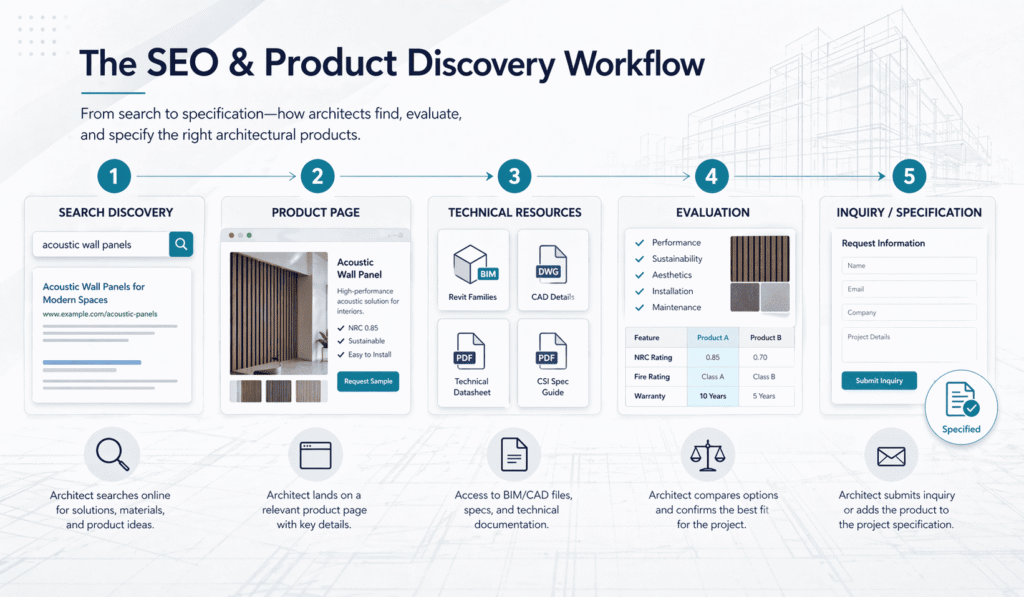
One of the biggest mistakes in marketing to architects and specifiers is leading with branding before understanding how people search. Strong messaging matters, but if a brand does not align its content with search intent, it may struggle to rank for valuable queries.
Architects and specifiers usually search with a purpose in mind. Their searches often reflect project needs, material comparisons, technical requirements, or design constraints. They may look for:
- acoustic ceiling panels for open office spaces
- exterior cladding systems for hot climates
- fire-rated glass partition systems
- commercial flooring materials for hospitality projects
- BIM files for facade systems
- sustainable interior wall panels for schools
These searches indicate a user who is already evaluating options or gathering technical information. That is why SEO for architectural products should target both informational and commercial queries related to product type, application, industry, performance features, and technical support.
A strong content structure should include:
- product category pages
- solution pages
- application-specific pages
- sector pages
- resource pages
- comparison content
- case studies
This structure helps search engines understand the site while helping users move naturally from discovery to evaluation.
Build Product Pages That Help Products Get Specified
A website is central to digital marketing for architectural products, but design alone is not enough. The site must make product research easier.
Many manufacturers still rely on product pages that are visually polished but lack technical depth. If a page offers only a short description, one image, and a basic inquiry button, it may not provide enough value to high-intent users. In architectural markets, the product page often serves as both a marketing asset and a technical reference.
A stronger product page should include:
- clear product descriptions
- application guidance
- available finishes or material options
- dimensions and specifications
- performance benefits
- technical downloads
- certifications
- installation details
- project imagery
- internal links to related systems or collections
For some categories, it also helps to provide product selectors, comparison tools, downloadable brochures, BIM objects, and CAD files. These features improve usability and increase the chances that the product stays under consideration.
The more useful the page becomes, the more likely it is to attract the right audience, generate qualified leads, and help customers specify the product with confidence.
SEO for Architectural Products Should Go Beyond Brand Terms
Many brands focus solely on branded keywords or product model names, limiting growth. Architectural product SEO performs better when it also targets how users search before they know the brand.
A better keyword strategy includes phrases built around:
- product type + application
- product type + material
- product type + industry
- product type + performance feature
- product type + climate or location need
- product type + certification
- product type + BIM, CAD, specs, or details
This is where semantic SEO becomes important. A page about perforated acoustic panels, for example, should not only repeat the core keyword. It should naturally include related terms such as acoustic treatment, office interiors, noise control, ceiling and wall applications, design flexibility, installation options, performance data, and finish selection, where relevant.
That broader topical coverage helps search engines understand depth and relevance. It also improves the reading experience because the content feels complete rather than repetitive.
Content Marketing for Architectural Products Should Educate, Not Just Sell
High-performing content marketing for architectural products is built around solving real project questions. Thin promotional content rarely earns trust or performs well in search. Educational content, on the other hand, supports both rankings and buyer confidence.
Useful content formats include:
- buying guides
- product comparison articles
- case studies
- sector-focused articles
- installation explainers
- sustainability content
- maintenance guides
- specification checklists
- material selection advice
- design trend articles with practical relevance
This kind of content works because it meets people at different stages of the research journey. An architect in early research may want inspiration and guidance on use cases. A specifier may need product data and compliance information. A contractor may be more focused on installation and performance under real conditions.
When content aligns with those needs, it becomes more than a traffic tool. It becomes part of the sales and specification support process.
Mini Example: How a Cladding Brand Can Attract Better Leads
Consider a manufacturer offering exterior cladding systems. If the company has only one general product page, it may struggle to rank well and attract broad, as well as low-intent traffic. A stronger approach would create separate pages for topics such as aluminum cladding systems, ventilated facade panels, commercial exterior cladding, and cladding systems for hot climates.
Each page could include project applications, finish options, technical benefits, downloadable data sheets, installation support, and BIM or CAD resources. The brand could then support those pages with blog content such as “How to Choose Exterior Cladding for Commercial Buildings” and “What Architects Look for in High-Performance Facade Materials.”
This approach improves topical relevance, supports search visibility, and attracts users who are much closer to specification or inquiry. Instead of focusing only on traffic, the company creates content that attracts better-qualified traffic.
BIM, CAD, and Technical Resources Can Be a Major Advantage
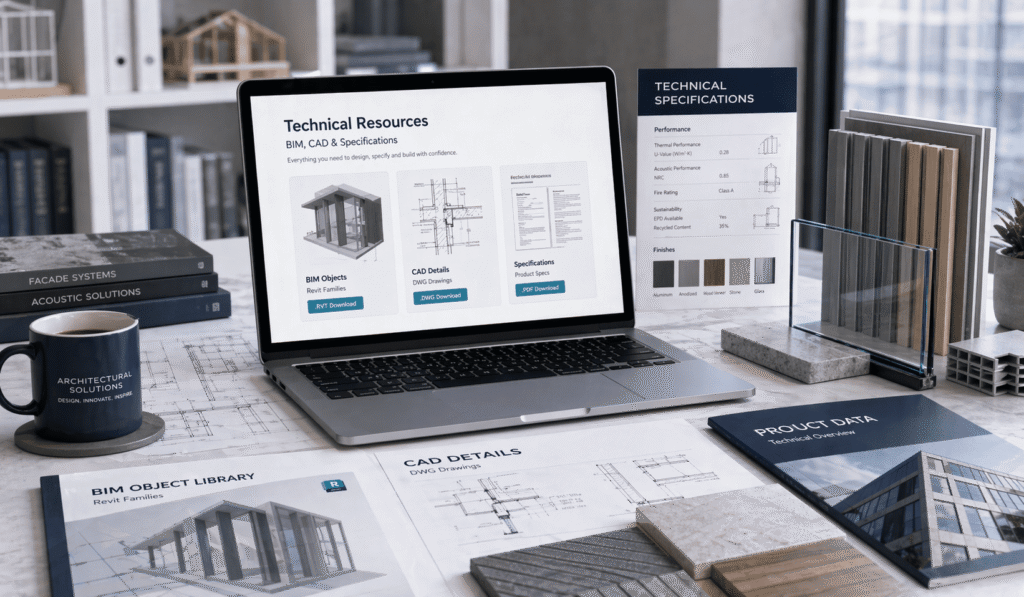
In architectural product marketing, downloadable technical resources are not just support material. They are powerful trust signals.
When brands provide BIM files, CAD details, technical specifications, certifications, submittal documents, and detailed product sheets, they become more useful to architects, engineers, and consultants working on real projects. These assets reduce friction in the evaluation process and help position the brand as a serious option.
For many architectural product companies, this is where digital marketing becomes far more effective. A visitor who downloads a product detail sheet or BIM file is often much more valuable than one who reads a generic awareness article. These actions indicate genuine project interest.
That is why technical resource pages should be easy to find, well-organized, and clearly connected to product and solution pages.
Social Media and Email Should Support the Buyer Journey
Social media is still an important channel, but its role in digital marketing for architectural products is different from its role in general lifestyle marketing. In this space, social platforms work best when they support visibility, proof, and professional credibility.
LinkedIn is often effective for reaching design professionals, consultants, distributors, and decision-makers through thought leadership, technical insights, project features, and product updates. Visual platforms can help brands showcase finished spaces, detail quality, and share installation visuals and material aesthetics.
Email marketing is equally valuable, especially when lists are segmented by audience type or interest. Someone who downloads information on ceiling systems should not receive the same follow-up as someone researching exterior cladding. A segmented email strategy can nurture different contacts based on product category, application, sector, or stage of interest.
This makes architectural product lead generation more efficient because follow-up becomes more relevant and more useful.
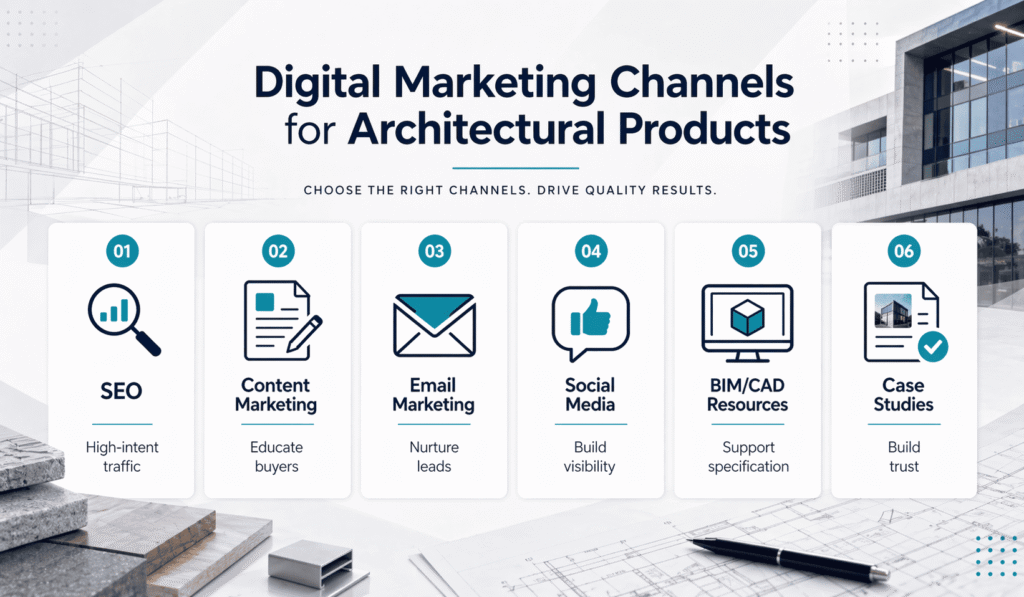
Best Digital Marketing Channels for Architectural Products
| Channel | Main Purpose | Best Content Type | Best For |
| SEO | Capture high-intent search traffic | Product pages, solution pages, technical resource pages | Architects, specifiers, product researchers |
| Content Marketing | Educate and build trust | Buying guides, blogs, case studies, comparison articles | Early to mid-stage decision makers |
| Email Marketing | Nurture and convert leads | Segmented campaigns, follow-ups, product updates | Warm leads, distributors, repeat contacts |
| Social Media Marketing | Increase visibility and engagement | Project visuals, videos, announcements, thought leadership | Brand awareness and professional reach |
| BIM/CAD Resource Marketing | Support specification-stage research | Downloadable files, technical sheets, detailed product resources | Architects, engineers, consultants |
| Case Study Marketing | Show proof and build credibility | Project stories, performance results, before-and-after examples | High-intent prospects evaluating trust |
Measure the Metrics That Actually Matter
Not every marketing metric deserves equal attention. In digital marketing for architectural products, total traffic alone does not tell the full story. A brand may increase traffic without improving lead quality.
Better performance indicators include:
- qualified organic traffic
- downloads of technical sheets
- BIM or CAD downloads
- sample requests
- contact form quality
- case study engagement
- product selector interactions
- visits to technical pages
- distributor or specification inquiries
These metrics are more closely tied to commercial value. They help brands understand which topics attract serious interest and which pages support real buying or specification activity.
How Architectural Product Brands Can Win Online
The most effective digital marketing for architectural products is built on relevance, usefulness, and trust. It helps the right audience discover products, evaluate them with confidence, and move closer to specification or inquiry. That requires more than broad awareness content. It requires a connected strategy built around search intent, strong product pages, educational content, technical resources, and lead nurturing.
For manufacturers, suppliers, and product-focused brands, the opportunity is clear. A company that creates useful content, supports real project needs, and makes technical information easy to access is far more likely to earn visibility, build authority, and attract better leads. In competitive architectural markets, that is what turns digital marketing from a branding exercise into a genuine growth channel.