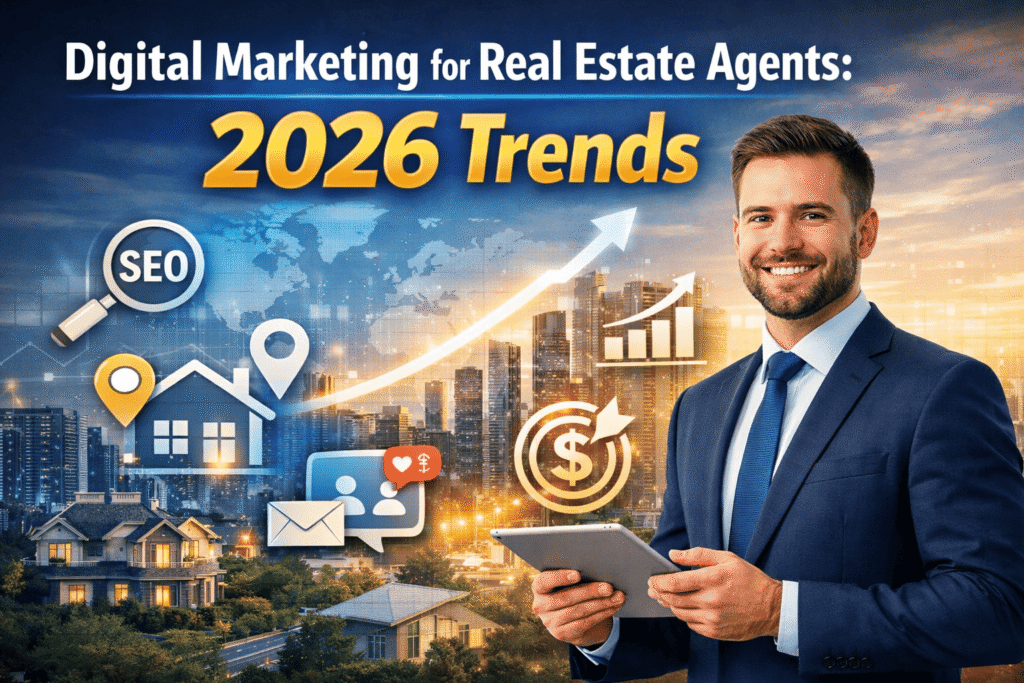
Digital marketing for real estate agents is necessary of in this era of marketing. It has become an essential part of how modern agents get discovered, build trust, and stay visible throughout the buying and selling journey. Today, most buyers and sellers begin their research online before they ever contact an agent. They compare websites, read reviews, browse listings, check social media, and search for local market information. That means an agent’s online presence often shapes the first impression, long before a phone call or meeting.
For real estate professionals, this creates a major opportunity. A well-planned digital strategy can help generate qualified leads, improve local visibility, strengthen personal branding, and keep an agent top of mind across multiple channels. The most effective approach usually combines real estate SEO, content marketing, social media, email marketing, paid advertising, and follow-up systems. The goal is not just to get traffic, but to attract the right audience and turn interest into real inquiries.
Why Digital Marketing Matters for Real Estate Agents
Real estate has always been a relationship-based business, but many of those relationships now begin online. Buyers and sellers often evaluate an agent’s expertise based on their website, local content, reviews, and overall digital presence. If that presence is weak or outdated, potential clients may move on to a competitor without ever reaching out.
This is why digital marketing for realtors should go beyond simply posting property listings. Listings may bring short-term attention, but long-term results come from building authority and trust. Helpful blog content, neighborhood pages, seller resources, market updates, FAQs, and review pages all help position an agent as a reliable source of information. That trust becomes a major advantage in a competitive real estate market.
Building the Right Foundation First
Before focusing on traffic, every real estate agent needs a strong digital foundation. That starts with a professional website that is mobile-friendly, fast, easy to navigate, and visually polished. It should clearly explain who the agent helps, what areas they serve, and what action visitors should take next.
A strong real estate website should include service pages, local area pages, clear contact information, high-quality property visuals, and a consistent brand message. Whether an agent works with first-time buyers, luxury sellers, investors, or families relocating to a specific area, the website should clearly communicate that. Generic messaging often underperforms because it tries to speak to everyone rather than directly address a target audience.
Strong branding also matters because real estate clients want confidence and clarity. When an agent’s website, social profiles, property pages, and email communication all feel professional and consistent, that creates trust. A digital presence should make it easy for prospects to understand the agent’s value and take the next step.
SEO for Real Estate Agents
Search engine optimization is one of the most valuable long-term marketing strategies for real estate agents. Real estate SEO helps a website appear in search results when people look for services, local market information, or properties in a specific area. These searches may include phrases like “real estate agent near me,” “homes for sale in Calgary,” “best area to buy a house,” or “how to sell a home fast.”
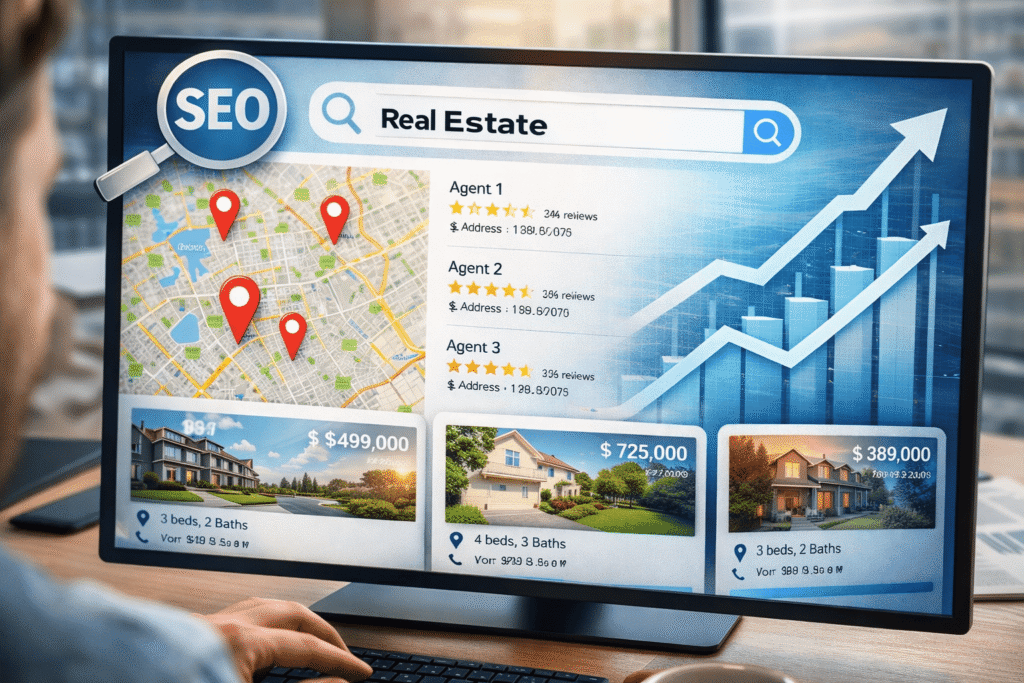
A strong SEO strategy starts with local intent. Real estate is naturally location-based, so content should reflect city names, neighborhoods, communities, and property types. A homepage alone is not enough. High-performing real estate websites often include area guides, neighborhood pages, buyer and seller resource pages, and blog posts focused on local search behavior.
Keyword placement also matters. The primary keyword, digital marketing for real estate agents, should appear naturally in the title, introduction, subheadings, and body content. Secondary keywords should also be included naturally. These can include terms like real estate digital marketing, real estate SEO, social media marketing for real estate agents, lead generation for real estate agents, email marketing for real estate, local SEO for real estate, and paid ads for realtors.
Internal linking also plays an important role. Blog posts should guide readers to service pages, consultation pages, area pages, and lead-generation offers. This helps improve user experience, supports SEO, and increases the chance of turning visitors into real customers.
Content Marketing That Builds Authority
Content marketing is one of the best ways for real estate agents to build authority online. Instead of relying only on listings, agents can publish useful content that answers the real questions buyers and sellers are already asking. This might include topics such as how much it costs to buy a home, how to prepare a house for sale, what to expect during closing, or which neighborhoods are best for a certain lifestyle.
This type of content helps in several ways. First, it improves organic visibility by targeting search intent. Second, it positions the agent as knowledgeable and trustworthy. Third, it gives potential clients a reason to spend more time on the website and engage with the brand before they are ready to inquire.
The best real estate content strategy usually includes blog posts, local area pages, market insight articles, video content, FAQ sections, seller guides, buyer guides, and downloadable resources. When these content types work together, they create strong topical authority around the core subject. That makes a website more useful, more relevant, and more competitive in search.
Social Media Marketing for Real Estate Agents
Social media marketing remains one of the most visible channels for real estate professionals. However, its real value comes from consistency and strategy rather than random posting. A strong social media presence helps agents showcase properties, highlight market knowledge, share local lifestyle content, and stay connected with their audience.
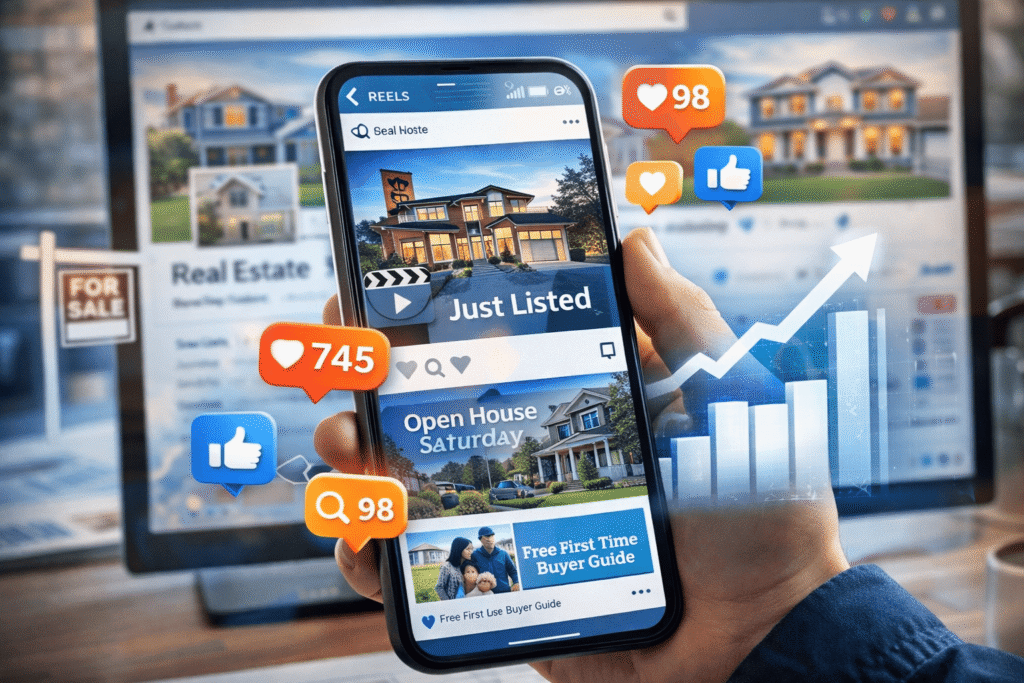
The best real estate social media strategy usually includes a mix of listing promotions, educational posts, local updates, behind-the-scenes content, client stories, short-form video, and market tips. This balance helps an agent look active, knowledgeable, and approachable rather than overly sales-focused.
Platforms like Instagram, Facebook, LinkedIn, and even TikTok can all support real estate marketing when used intentionally. Captions, bios, and visuals should clearly communicate where the agent works and who they help. Social media should not only attract attention but also support broader goals such as website traffic, lead generation, and brand recognition.
Email Marketing and Lead Nurturing
Not every lead that we get through marketing campaign is ready to buy or sell immediately. Some people may be months away from making a decision. Others may still be comparing options or researching the market. That is why email marketing remains a powerful tool for real estate agents.
Email allows agents to stay in touch with leads over time and continue offering value. A strong email strategy can include welcome sequences, listing alerts, buyer education emails, seller tips, local market updates, and re-engagement campaigns. When paired with a CRM, email marketing becomes even more effective, enabling better segmentation and follow-up.
This is especially useful for real estate lead nurturing. Someone who downloads a buyer guide may not be ready today, but consistent email communication can keep the agent top of mind until the timing is right. In real estate, consistent follow-up often makes the difference between losing a lead and winning a client.
Paid Advertising for Real Estate Agents
Paid advertising can deliver faster visibility than organic strategies alone. Google Ads can help capture users with high intent, while social media ads can support awareness, listing promotion, and retargeting. For real estate professionals, paid campaigns work best when they are tied to a clear conversion goal.
That goal might be booking a consultation, requesting a home valuation, downloading a seller guide, registering for new listings, or viewing a specific property page. Sending paid traffic to a generic homepage often wastes budget. A focused landing page usually performs much better because it is designed around one clear action.
Paid advertising is most effective when it supports a larger strategy. An agent who combines ads with strong website content, email follow-up, and local SEO will often see better results than someone who relies on ads alone. The strongest campaigns are not just about clicks. They are about bringing the right people into a comprehensive lead-generation system.
Measuring the Right Results
A successful digital marketing strategy should always be measured. Traffic alone is not enough. Real estate agents need to understand which channels are driving leads, which pages are generating inquiries, and which efforts are resulting in real appointments or clients.
The most useful metrics usually include website traffic, local search visibility, form submissions, phone calls, cost per lead, conversion rate, appointment bookings, and closed deals. Social engagement and email open rates can also provide useful insight, but the main focus should always be on business outcomes.
Tracking results makes it easier to improve future campaigns. It shows what is working, what is underperforming, and where more effort should be invested. In a competitive industry like real estate, smart measurement helps agents avoid guesswork and build a more reliable growth strategy.
How Real Estate Agents can Grow with Digital Marketing
Digital marketing for real estate agents works best when it combines visibility, trust, and consistency. SEO helps agents get found in search. Content marketing helps them educate and build authority. Social media keeps them visible and relevant. Email marketing supports lead nurturing, and paid advertising helps accelerate reach. Together, these strategies create a stronger and more sustainable marketing system.
The agents who grow steadily are usually the ones who treat digital marketing as an ongoing process that builds trust, supports relationships, and helps turn interest into real business. Real estate professionals looking to strengthen their online presence and build a more effective digital growth system with Camziotech can be positioned as a trusted support partner in creating better visibility, stronger branding, and smarter digital performance.